
Pep Talk
On Getting Unstuck...Again

Hi, Friend.
I’m returning to some Past Me wisdom right now, because Present Me desperately needs it.
Let me explain.
In 2020 my book Keep Moving: Notes on Loss, Creativity, and Change was published. NPR called it “A meditation on kindness and hope, and how to move forward through grief.” At its core, it’s a collection of essays and quotes about getting through difficult times.
I’d written the book, piece by piece, in 2018 and 2019, during a contentious divorce, but by the time Keep Moving was released, life had calmed down. I could breathe again. Several months later, though, life got even more difficult and complicated than it had been when I’d written the book. I found myself opening Keep Moving now and then, and gleaning some hope and strength from the words an earlier version of me had written and believed in. I needed her perspective. Now I need Past Me’s perspective again, but in a different way.
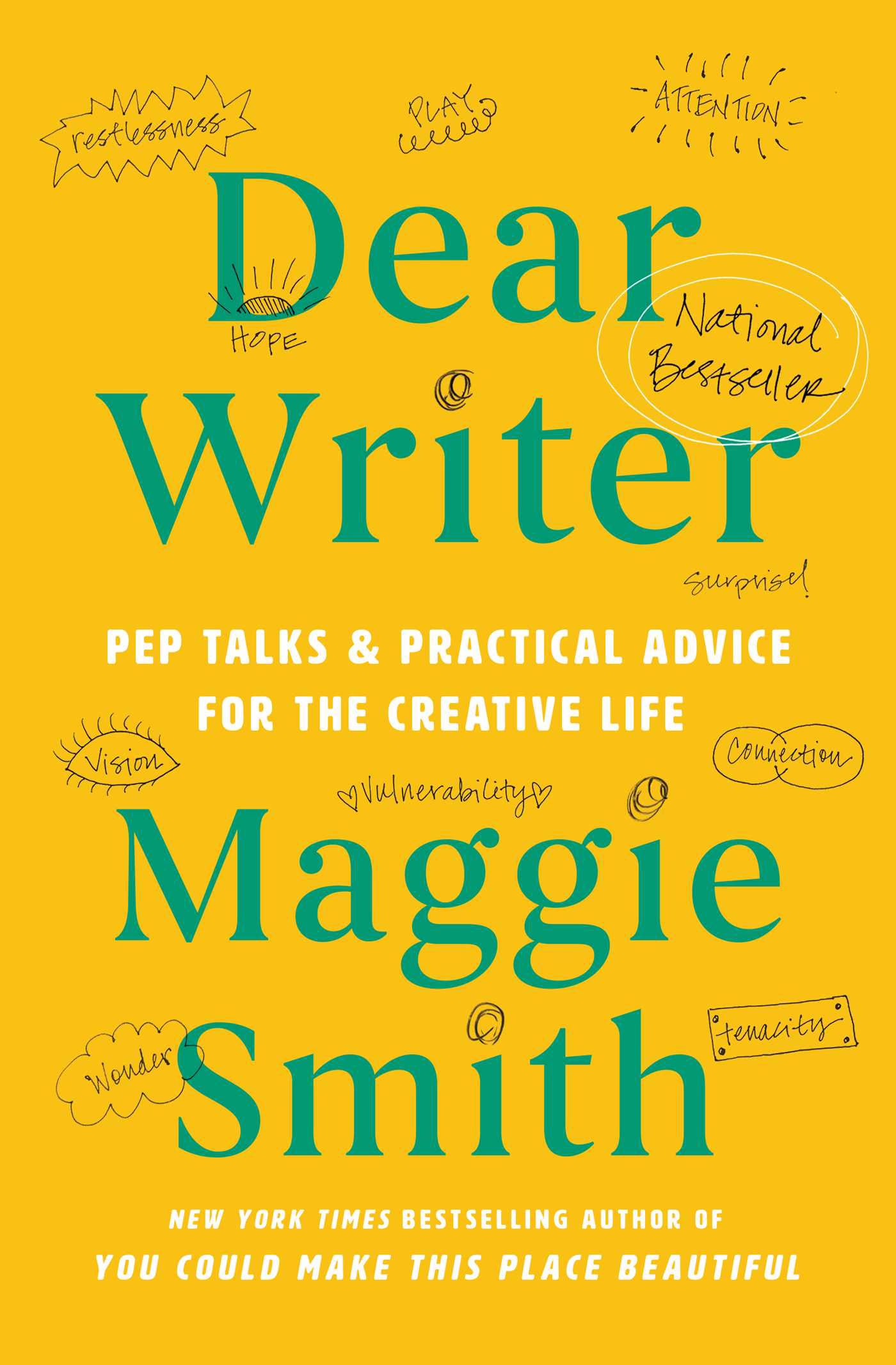
In 2025 Dear Writer: Pep Talks and Practical Advice for the Creative Life was published, and the paperback comes out on Tuesday. Here’s the updated cover!
I was telling some friends and colleagues the other day that I feel like I’m swimming upstream with a current project, struggling against the current. (I think my less articulate explanation in the moment was, “This book is kicking my ass!”) I think I need to return to Dear Writer the way I returned to Keep Moving. I could really use a pep talk and some practical advice.
A couple of years ago, I responded in here to two questions from For Dear Life subscribers, this one from Lindsey:
When you feel stuck in your writing or creativity, what does your pep talk sound like?
And this one from Antonia:
How do you keep going through rejection, setbacks, periods of stuckness and, I don’t know if you've had this because of your incredible career, but that feeling of being so, so behind? This from a generally positive poet/ person.
And this is how I responded, because every single one of us contends with stuckness, self-doubt, and discouragement. We all need pep talks, whether we get them from others or give them to ourselves.
There may be external circumstances in your life that make creating difficult, but I think most stuckness comes from a critical, undermining inner voice. What does that voice say? I’m not where I think I should be. The ideas just aren’t coming. My work isn’t being received the way I hoped it would. I can’t do this. Why did I think I could do this?
How do we speak out—or act out—against that inner voice?
Believe in the value of what you’re doing.
Trust in the value of your own work—and not just in the end result, the finished product, but the process. (Also: I hate associating the word product with writing. Hate it.) Trust in the value of making things, not just the value of the things you’ve made. Try to avoid being overly invested in the outcome. Let go of that as much as you can.
It helps me to remember that I’m not for everyone. My work isn’t for everyone. You and your work aren’t either. If you’ve made something no one would object to, it’s probably something no one will feel passionate about either. So if your writing is loved by some, it may well be hated (or found meh) by others. Rejections and negative reviews are part of every writer’s life. It will never not suck to have your work criticized or ignored, but…
Remember that editors and reviewers are only human beings.
They’re just people, like you and me, with tastes, preferences, and pet peeves. They like some books, poems, and essays more than others. Remind yourself that your work is being received (accepted, rejected, ignored, panned, celebrated) not by an institution but by people. Not the NEA, not the New York Times—people. Imagine that the person receiving your work is someone like you, someone who probably has an overloaded Submittable queue, many other competing responsibilities, and all kinds of things going on in their personal life.
This is not to say that if and when you experience rejection, it means the person was just distracted or didn’t know what they were doing. No, that’s not it. Sometimes the work isn’t ready yet. We can own that. Sometimes the work is ready, but it’s not the right fit for that venue or opportunity. Lesson learned. Sometimes the work is ready and a good fit, but there was other work that resonated more with that particular human being on that particular day in that particular context. As one of my mentors always said: It’s a crapshoot. (Which is both frustrating and comforting, somehow.)
Pro Tip: Don’t read the comments! Don’t read your Goodreads reviews, especially the two-star ones! Why feed the inner critic? This, from Rebecca Makkai’s delightful Substack, SubMakk, made me laugh: “…it’s hilarious that the best review of your life in The New Yorker and a snarky comment on Goodreads from someone who didn’t get past page 50 can hold equal weight in your brain. How does that work, exactly?”
I don’t know how it works, but it’s so true. So how do we not take it to heart?
Remember that you are not your work.
So, you’re focusing on what you can control. You’re making the work as strong as you can, and you’re being discerning about where you send it. You understand that the people receiving it are just that—people—and the rest of the process isn’t up to you. Whatever happens next, it isn’t a commentary on you as a person. Your poem being rejected isn’t you being rejected. It isn’t even your poetry being rejected, it’s just that particular poem, or that specific batch.
You are not your work. You are so much more than that.
TL;DR: Make your art, send it into the world, and remember that what happens next is none of your business, really. You can’t dictate or control the relationship that other people have with your work. You’ve done your part—you made the thing!—and now you can move on to make something new.
Thanks for the questions, Lindsey and Antonia.
Love & solidarity—
Maggie
I'm prepping to be an author in conversation at a bookstore event on Tuesday and was just looking up a quote from Dear Writer to reference during the talk (the idea of books as permission slips). Minutes later, your name was in my inbox with this encouraging pep talk. Such a fun coincidence that the paperback of DW is coming out that same day I was planning to mention it.
Thanks for all your many pep talks, including this one. And thanks for the permission slips we didn't know we needed but you so generously gave us anyway.
I return to Keep Moving so often. That book and When Things Fall Apart keep me sane when shit is sideways.
And you know how I feel about Past/Present/Future me framework. A game changer from one of the best to ever do it! (You) ❤️